Online fax has its own vocabulary, and this glossary explains every common term in plain English. From cloud fax and virtual numbers to HIPAA, BAA, and resolution, you will find each one defined simply. Use it as a quick reference whenever a fax service throws jargon at you.
The core terms: online fax, cloud fax, and fax app
Online fax means sending or receiving a fax over the internet instead of a landline and a physical machine. Your document travels as data to the provider, which converts it and delivers it to the recipient’s fax line.
Cloud fax is the same idea with the emphasis on where the work happens. The provider’s servers handle the transmission, so nothing runs on your own hardware. For a fuller walkthrough, see what online fax is and how it works.
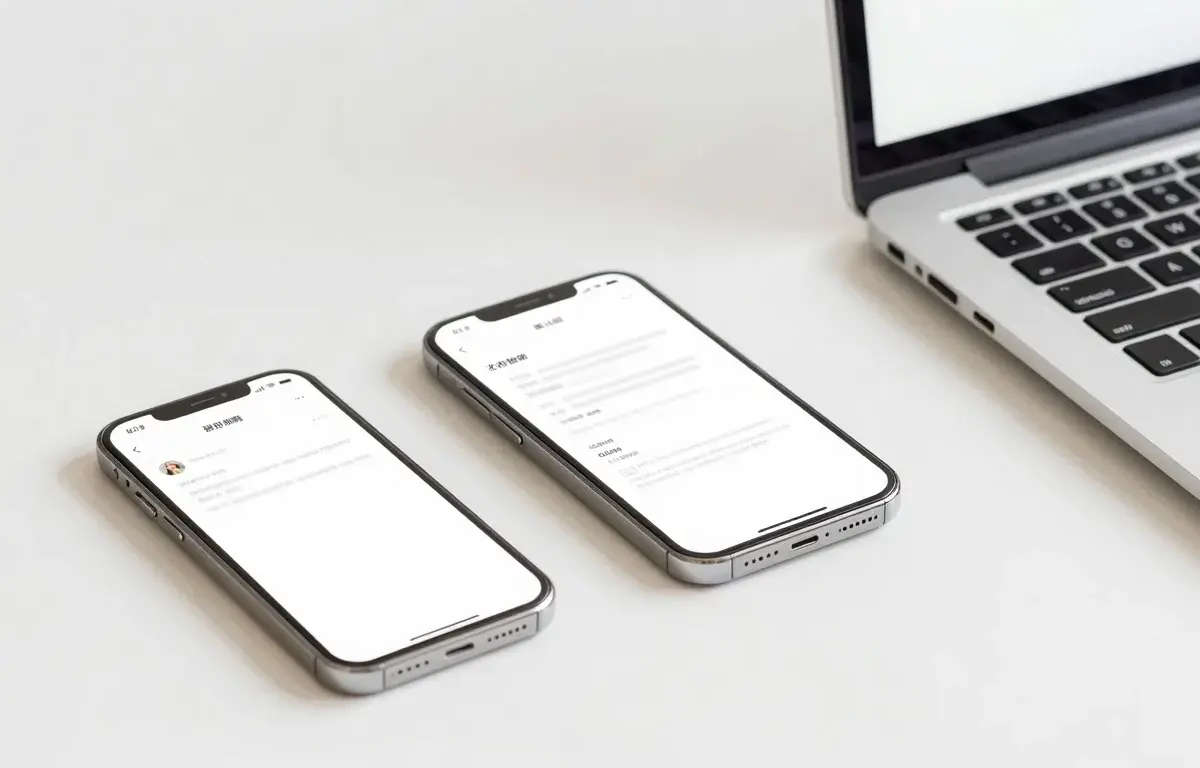
Fax app refers to a mobile application that sends faxes from your phone. You photograph or attach a document, enter the recipient number, and the app routes it to a real fax machine.
Faxend, the iOS app we build, is one example. It turns a photo or PDF into a fax in a couple of taps, which is genuinely fast when you are away from a computer. The honest limit: Faxend is iOS only, so Android users need a different tool, and very high volume senders may prefer a desktop service.
Fax service is the broader term for any provider that sends faxes for you, whether through a website, an email gateway, or an app. Our roundup of the best online fax services compares the main ones.
Fax numbers, lines, and how faxes travel
Fax number is the phone number a fax is sent to. With online fax, it is a virtual number tied to your account rather than a jack in the wall.
Virtual fax number is a fax number that exists only in software. It can be local or toll free, and faxes to it arrive in your inbox or app.
Toll-free fax number starts with a code like 800 or 888. Senders reach it without long distance charges, which some businesses prefer for customer-facing lines.
Porting is moving an existing fax number from one provider to another so you keep the number your contacts already have.
T.30 and T.38 are the protocols that govern how faxes negotiate and travel. T.38 in particular lets faxes cross internet phone systems more reliably, which is why cloud providers lean on it.
ECM, or Error Correction Mode, re-sends any garbled parts of a page during transmission. It is the reason a modern fax usually arrives clean even over a noisy line.
Sending terms: cover sheet, broadcast, and resolution
Cover sheet is the first page that names the sender, recipient, and page count. Many services generate one automatically.
Fax broadcast, sometimes called a fax blast, sends the same document to many numbers at once. It is common for notices and bulk forms.
Resolution describes fax sharpness, measured in dots per inch. Standard mode runs near 200 by 100 dpi, while fine mode roughly doubles the vertical detail for cleaner text.
If a document has small print or handwriting, send it in fine resolution. The file is larger and takes a little longer, but the recipient gets a far more legible page.
Delivery confirmation is the receipt showing a fax reached its destination, including time and status. Providers vary in how much detail they log, so check this if audit trails matter to you. Our checklist for choosing a service covers what to look for.
Faxend, the iOS app we build, turns a photo or PDF into a fax in a couple of taps. It is free to download; per-fax or plan pricing applies. We test it the same way we test every service on this site.
Security and compliance vocabulary
HIPAA is the United States health privacy law that governs protected health information. A fax service is HIPAA relevant when it safeguards those documents and will put its responsibilities in writing. The federal summary lives on the HHS website.
BAA, or Business Associate Agreement, is the contract a provider signs agreeing to protect health data on your behalf. No signed BAA means the service is not a fit for regulated medical faxing.
Encryption in transit protects your fax while it moves across the network, usually with TLS. Encryption at rest protects the stored copy sitting on the provider’s servers.
Audit trail is the logged history of who sent what and when. Regulated fields rely on it to prove a document was handled correctly.
Billing and plan terms that trip people up
Pay per use charges you per fax or per page with no monthly commitment. It suits people who fax only a few times a year.
Freemium offers a limited free tier meant to nudge you toward a paid plan. Free pages, watermarks, or ads are the usual trade.
Page bundle is the block of pages a monthly plan includes, such as 200 or 500. Overage fees apply once you pass it.
Overage is the extra per-page charge after you use your bundle. It is where a cheap-looking plan can quietly get expensive.
As of writing, monthly plans commonly land somewhere around 8 to 15 dollars, but pricing shifts often, so confirm current rates on the provider’s own site.
Legacy and technical terms you will still see
Fax machine is the physical device that scans a page and sends it over a phone line. Online fax replaces it while still reaching machines that remain in use.
Analog line, also called POTS, is the traditional copper phone line older fax machines need. Many offices no longer have one, which pushed faxing online.
Fax over VoIP means faxing through an internet phone line. Plain VoIP can garble faxes, which is why dedicated services use T.38 and ECM to keep them intact.
OCR, or Optical Character Recognition, converts a faxed image into searchable text. Some services apply it so incoming faxes are easier to file and find.
To see how these pieces fit together in practice, browse our industry explainers.
Frequently asked questions
Online fax lets you send and receive faxes over the internet instead of a physical machine and phone line. You upload or photograph a document, the service converts it, and it reaches the recipient’s fax number. Incoming faxes arrive as files in your inbox or app.
Cloud fax is the general model where a provider’s servers handle transmission over the internet. A fax app is one way to access that, sending faxes from your phone. Both reach real fax machines. The app just puts the controls on your mobile screen.
It means the service protects health information and will sign a Business Associate Agreement taking legal responsibility for that data. Look for encryption in transit and at rest, access controls, and audit logs. Without a signed BAA, a service is not suitable for regulated medical faxing.
Standard resolution near 200 by 100 dpi is fine for typed pages. Switch to fine resolution, roughly double the vertical detail, for small print, handwriting, or forms. The file is larger and sends a little slower, but the recipient gets a much more legible page.
Yes. A fax app routes a photo or PDF from your phone to a real fax line, so no machine is needed. Faxend, which we build, does this on iOS, while other apps cover Android. Pricing is usually per fax or a small plan.